Here are some of the albums I have either recorded or had a hand
in mixing.
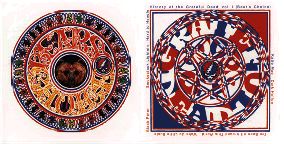
Bear's Choice, (Warner Bros. 1973.)
The first album made from what I now call my "sonic journals".
This album was excerpted from two of the shows at the Fillmore
East in Feb 1970, a show which was extra nice, as the mixing board
and the hall were sweet-sounding. Arthur Lee's band Love was the
opener for the shows. The second act was the Allman Brothers,
and the next album is from their sets.
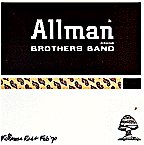
Allman Brothers Band
Live at the Fillmore East, Feb. 1970, Grateful
Dead Records (GDM)1997.
This album was compiled from the tapes of the three shows at the
Fillmore East on 11, 13, and 14 Feb 1970. The Brothers were a
fairly young band at the time and I think you will be pleased
by the high level of performance at these shows. The best performance
of each song was chosen for the CD. John Cutler and Jeffrey Norman
did an excellent job cleaning up the sound on these old tapes.
To the best of my knowledge there are very few good live recordings
of them around from this period. The Allmans's have their own
website called "Hitting the Web".
[liner notes]
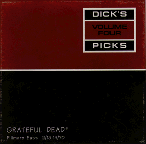
Dick's Picks v.4, Grateful
Dead Records (GDM)1996.
Here are more songs from the shows I derived Bear's Choice from... lacking
those parts previously released in Bear's Choice. It is a kind of musical "puree" made by mix-and-match. I had little say on the format here. In fact, I was criticised for suggesting that each night be released as a whole show (with the BC parts included) on separate albums,in a set. But then, what do I know about such things? Perhaps if there is enough interest they may eventually do it. One thing I need to make clear about this series of shows. I seem to be constantly running across references to "early shows" and "missing tapes". There was only a single show with three bands on each of the nights. This lione-up was so heavy, there was no way two shows could have been done, each show was about five or more hours long. All three bands liked to play long sets, although Love was kept short, about 45 minutes. Two set changes, and the Allmans played a relatively long set. Sat night's show went on until well after midnite, I seem to remember it ended near two AM. The Dead always played long shows in those days, and they took a break, dividing their set into two parts as was the practice for almost their whole career. There are no missing tapes except for a couple of Love's sets, and they were lost after the fact, I always recorded all my mixing on all my shows, at least so long as I had enough money to buy reel tape- sometines I didn't, only cassettes exist of those shows.
[liner notes]
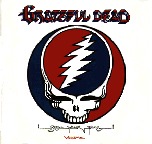 Steal Your Face, (Arista)/Grateful
Dead Records (GDM) 1976.
This is one that I would just as soon forget. The master tapes
were a disaster of epic proportions, requiring a complete over
dubbing of all the vocals and many of the instrumental tracks.
I had absolutely nothing to do with the recording of the master
tapes, and was called in to try to "fix" it. Phil Lesh
and I were given only 18 days to rebuild this "titanic".
Fact is, of course, no-one could make a silk purse out of this
pig's ear.
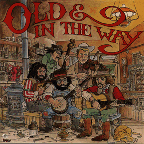 Old And In The Way,
(Round Records/Sugar HIll/RykoDisc/BGM) Grateful
Dead Records (GDM) 1975.
With the formation of the group, Old and in the Way, I had a wonderful
opportunity to try the various ideas I had about the production
of a realistic stereo sound from multiple microphones. Binaural
recordings are traditionally done with a simple stereo pair. I
experimented with the placement of the mics, and to a certain
extent with kinds of mics. I was limited in the choices available
and I vastly preferred omnidirectional types. Incidentally, none
of the microphones that were used in the recording were also fed
to the PA. The mics were clipped onto the PA stands. I was able
to capture a stereo "space", which while different from
the actual on stage sound, gives the listener the impression of
being in amongst the performers, and isn't dependent on the listener
being in any particular position with regards to the placement
of the speakers. Something like a hologram, is the way I like
to think of it. In contrast with my sonic journal tapes, this
was a purpose recording not related to the PA mix at all.
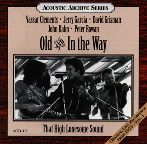 That High Lonesome Sound,
Acoustic
Disc 1996.
This is the second album from the 1973 performances of Old and
in the Way. David Grisman has said that he is hoping to release
more of the tapes from this now classic band in the future, but
I think that the sound may not be as good as these last few shows
were. It was a learning experience for me, coupled with the usual
sound-in-the-hall difficulties facing a band playing small venues.
It is too bad that the band didn't continue for a while longer.
[liner notes]
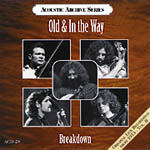 Breakdown,
Acoustic
Disc 1998.
And here (to my amazement) is the third album derived from the two final concerts I recorded of Old and In the Way at the Boarding House. I didn't think that there were that many songs but here it is... So much for my memory of events over 25 years ago... No, I am NOT going to blame it on "the drugs" (I seem to remember we did do some from time to time in those days).
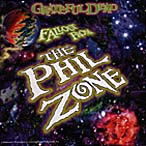 Fallout from the
Phil Zone, Grateful
Dead Records (GDM) 1995.
In this new release, Phil has chosen about 63% of the songs from
my sonic journal recordings, including the New Speedway Boogie
song which turns out to be one of my rehearsal tapes, found in
a box marked "unknown". This was probably due to the
tape becoming separated from its original, marked box. In the
period of mid '69 to mid '70, we did frequent rehearsals, as well
as sound checks at all the shows. I have always thought that this
was why the records of the period, Workingman's Dead and American
Beauty, are among the best of their studio efforts. Later they
became lazier about both things. Phil has chosen many of the same
songs which I for years tried to get put on a record. Especially
a hot live version of Viola Lee Blues and The Mason's Children.
The Mason's Children was never "good enough", (don't
ask ME why either). I am really glad that I was at the Rio Nido
gig (Pig's Midnight Hour), which occurred during the period when
I was not on the Dead's crew, but I just came out to the show
and taped it. The tape was also recorded in the separate channel,
one for vocals and the other for instruments setup, which I used
for all my recording of live gigs until late 1968. This was similar
to the Beatles early stereo recordings. This technique gave a
powerful "space" effect, but is hard for the modern
listener to accept. The reason for this illusion of space is that
the mikes on the front of the stage are all in one side, and the
mikes on the back of the stage in the other, so the two signals
have a natural time difference. The ear interprets this as space.
Phil resolved this difficulty by mixing to mono. I probably would
have tried a digital technique in an attempt to preserve the spaciality,
but unfortunately I was not consulted during the album's preparation.
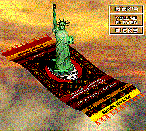
Dick's Picks v.11, Grateful
Dead Records (GDM) 1998
This was made from one of my sonic journal tapes, pretty much the standard for that period.
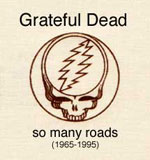
So Many Roads, Grateful
Dead Records (GDM) 1999
This compilation contains many of my sonic journal tapes: All of disk one, and one cut on disk two. Recently I received a gold record for my part in it, the only such award I have ever gotten, although I think some of my other albums must surely have sold at least as well as this one.
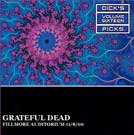 Dick's Picks v.16,
Grateful
Dead Records (GDM) 1999
Another from my sonic journals. Oddly, the venue was a revived Old Fillmore. I don't recall much about this show, but I do remember we all went to the Stones show the following night in Oakland. They blew up all their Ampeg amps during their first set. The Dead offered to help them in their need, and RamRod, Jackson and Sonny Herd drove into the city and brought the band's souped-up Fender amps back over to the coliseum, arriving just in the nick of time for the Stones to go on after Ike and Tina's opener. Personally, I thought they sounded much better on the Fenders than on their somewhat wimpy Ampegs. (What ever happened to Ampeg?) Later, in December, I did the sound for the free Stones show out at Altamont. The Airplane and the Dead were both supposed to play at that show, but...that's another story... and yes, I do have a journal of that gig too.
Janis Joplin in Concert, CBS 1971.
Now this is a complete shambles made of my tapes of a very good
performance. Three of the songs on this album: Roadblock, Flower
in the Sun and Summertime, were taken from my tapes which were
stored at the Alembic studios in SF during the time I was in jail.
Dan Healy took my tapes of the Big Brother and the Holding Company
show at the Carousel Ballroom in June of 1968 to Elliot Maser,
claiming that they were "his" (Actually, he wasn't even
present at the show, but he had heard them, and knew how extraordinary
they were). Maser decided to use three of the songs, but re mixed
them to "make them match" the poor quality of the other
recordings he was using in the album. When Healy learned that
they were going ahead with them, he belatedly told them that "Bear
was involved" in the recording (they were ENTIRELY my work).
He signed the contract (!), but when I learned what Maser had
done to the stereo space (I used the Beatles', vocals in one channel
and instruments in the other, technique, same as at Rio Nido,
mentioned above), I refused to sign, and told them that they must
not release the album mixed the way it was. They went ahead, (believing
they had acquired the rights from Healy) and I was unable to stop
them. I never signed a release for the rights to the tapes, but
did agree to drop my suit against them for that one release (they
then paid me a small royalty). The songs used were Summertime,
Roadblock, and Flower in the Sun.
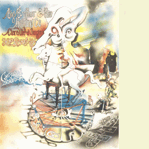
Big Brother Live In Concert at the Carousel Ballroom, 23
June 1968. (SONY/Legacy). To be released in early 2000, I hope.
I believe this album will be hailed as the definite Big Brother live album of all time. Perhaps on some other night they gave a better and more energetic performance, I don't know-- I wasn't lucky enough to be present at it. I was at this one, and I thought at the time it was exceptional. The important thing is, these tapes survived. This is Janis at her absolute peak, and the band was rarely so "on" as they were at these shows. They were kicking ass and having a hell of a good time. Listeners should realise that in those days we didn't yet have onstage monitors for the singers and they depended on the sound coming back from the hall and the sound of their instruments to find the pitch, so the singing sometimes is a bit off. That is how it was then and most multi-tracks of live concerts of the era were overdubbed later to "fix" this problem. Is that a "live album? (...Sort of.) This album is a real concert, warts and all. Working with Paul Stubblebine, the tapes of the weekend's concerts were transferred to digital using the HDCD encoding process. If played on a player with the Pacific Microsonics decoder chips, this will give essentially a 20-bit signal. Not all the tapes managed to make it through to the present, and I didn't have enough blank tape at the time to record all the shows. However, Sunday was far and away the hot night and we have all of that show. The
sound is much better than I thought it would be, no tape hiss, and no
noticeable distortion or evidence of deterioration of the recording media.
This is surprising considering these tapes are 31 years old
and have not always been stored under ideal conditions. In fact,
I think the sound is a "monster". A unique character of the technique
I used in my "diary" or sonic journals of that era was to
put the PA signal in the left channel and all instruments
not sent to the PA (most of them, usually) were placed in the right. The PA systems of the day were barely able to manage the vocals and drums. This odd sounding (to modern ears) technique produces a nice fat, three dimensional sound when it is played back. The sound is so hot and LIVE that I think few listeners will complain about the vocals and drums coming from one side. Turn it up good and loud! You could even try moving the speakers around, or use three channels, with the right side duped into a second outside channel, with the left channel as center!There are 13 songs from Sunday and one bonus track from Saturday on the album, which is 71 minutes long. The second version of Call on Me shows how different the band's interpretation of a song would change from one performance to the next. The album cover will be an adaptation by the artist, Crazy Arab, of the poster he did for an earlier show in May (BB cancelled that weekend). The set list will be along the right hand edge in the finished cover art.
Set
List
I have a lot of tapes stored in the Dead's tape vault. Virtually
every band that played on the same bill with the Grateful Dead
during my years as soundman was recorded. I would be very interested
in working with any of the bands concerned to see if the tapes
represent anything worth releasing. I will post the list once it is OCR'ed (a big job!).
Bearhome Enameling
Enamels Castings
Carvings Graphics
Logo Music
Essays
 zbear@crl.com