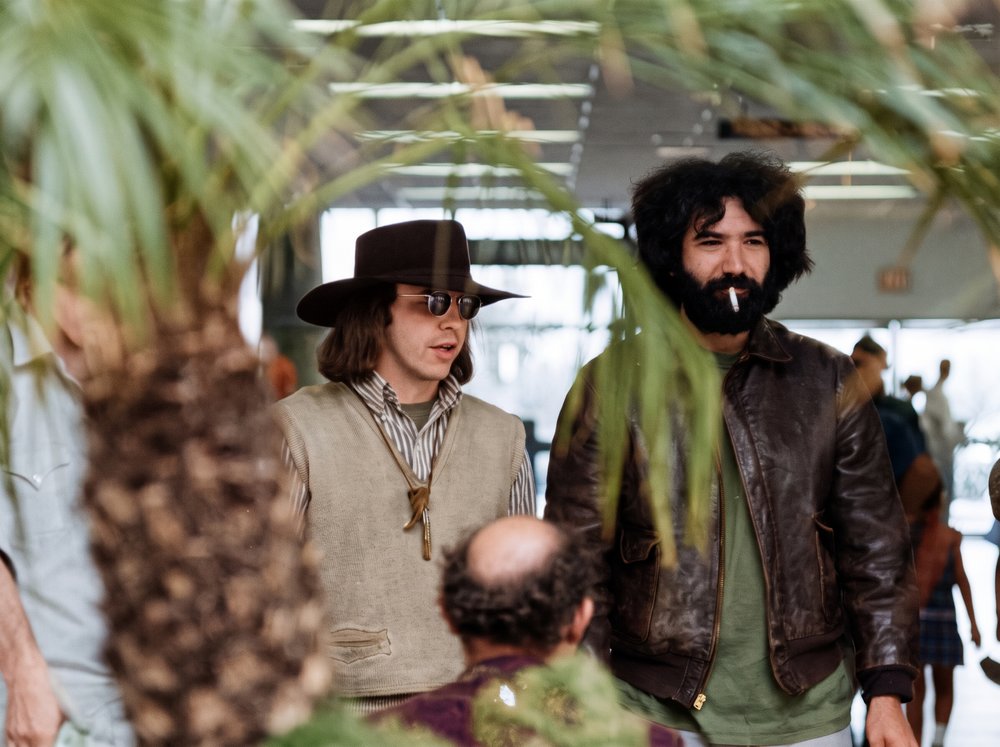
I tasked the AI Claude to evaluate the essays of Owsley that he wrote in the late 90's and critique them with the advantage of 25 years of scientific studies that have been done since he wrote them. As always, I insisted on an objective and fact driven analysis. So here is a retrospective on the essays of Owsley Stanley, written in the late 1990s, measured against the scientific and policy record in 2026.
His ideas, in his own words, compared to the world that followed.
Back in the late '90s, Owsley Stanley put up a website called thebear.org. Most of it was his art. Enamels on gold, castings, carvings, the Grateful Dead logo. But tucked in with the art was a set of essays. Drugs and the law. Cannabis. Diet. Ice ages. Climate. Vinyl versus digital. Kids and TV. Weights and measures.
I had the AI Claude read every page of thebear.org. That includes the long climate essay, plus his music notes and his album pages. Then I had it check what he said against what is actually known now, in 2026. Where Owsley is quoted, it is his words exactly as he typed them. His spelling stays too. If he wrote "gaurantee," you'll see "gaurantee."
A word on fairness before we start. Owsley was an autodidact. Most of this was written in the late '90s, when the web was a fraction of what it is today, and science journals sat behind library doors. He had nobody editing him and nobody fact checking him. That counts for something. It doesn't change whether he was right or wrong.
The site changed over the years, too. The copy we host here at this site is the 1999 version. The Wayback Machine also has captures from December 2019, and Owsley revised some passages in between. I'll point it out where that matters.
THE MAN WHO TRUSTED HIS OWN EYES

To understand the essays you have to understand how the man thought. He didn't take anybody's word for anything, he investigated and researched on his own.
When he wanted to know why records sound the way they do, he put them under a microscope. He did it in the days when he produced the Old and In The Way LP. When he wanted his enamels to be perfect, he worked under a 10 power binocular microscope. He and a glass worker friend designed their own kiln, the Ultrakiln, because nothing else he'd seen was good enough. When the early Dead sounded like shit on stage, he figured out why. In his words:
"I could play you tapes of the early Dead that would make you cringe they're so bad. They couldn't sing for shit."
He blamed the stage monitors, and he was right. Then he did something about it. "I insisted on sound checks", he wrote, and he got the band listening to tapes of their own shows. That is a man who believed in testing things.
That habit is the key to everything that follows. When Owsley could put his hands, his eyes or his ears on something, he was usually right, and sometimes years ahead of everybody. When he couldn't, he reasoned his way to an answer from his principles first. The whole atmosphere. The chemistry inside your liver. Then he believed it as hard as he believed what he'd seen with his own eyes.
That's where he got into trouble.
MONEY FOR NOTHING
On Psychedelics, The True Reason for Drug Prohibition, Win the War With No More Casualties

Let's start where he was strongest. Owsley's case against drug prohibition wasn't moral. It was economic. Make something illegal that people want, and you hand the business to criminals. You lose any control over what's in the bag. The price goes through the roof, and that money buys cops, judges and politicians. He called it "money for nothing", and he used the phrase over and over.
"Society should never intentionally create a black market. All black markets are a danger to the community due to the lack of controls and the high delivery fees that they force on the delivery system."
He backed it with a flat principle: "The simple principle of harm reduction dictates that all drugs should cease to be illegal."
Thirty years on, that argument holds up pretty damn well. Portugal decriminalized possession of every drug in 2001 and put the money into treatment instead of jail. More people got into treatment. HIV and hepatitis C rates dropped, as did arrests. Drug deaths fell hard in the first five years and stayed below where they were in 2001. People still argue about how much of that was the law and how much was other things going on at the same time. But it did not turn Lisbon into a drug tourist trap, and it did not blow up drug use. Illicit drug use among 15 to 24 year olds actually went down.
His plan went further than Portugal. He wanted plants and crude plant drugs sold under license, and purified chemicals by prescription. No advertising for any of it, including the state lottery. Nobody has tried the whole thing. But one piece of it is now law in two states. Read this, and remember he wrote it in the '90s:
"A requirement might also be made that a person who wishes to use the psychedelics be a member of a support group which should have a trained psychological worker associated with it."
Oregon voters approved psilocybin services in 2020. Before you get your mushrooms, you sit down with a licensed facilitator, and that facilitator stays with you through the whole trip. Colorado passed its own version in 2022 with licensed healing centers. That's damn near exactly what Owsley sketched out.
Now the misses, because there are some.
He was dead sure the states would never be allowed to go their own way. Talking about the 1996 medical marijuana votes in Arizona and California, he wrote, "I can almost gaurantee that these laws will never be implemented". They were implemented. Medical cannabis spread state by state. By April 2026 those state programs were so established that the feds moved state-licensed medical marijuana into Schedule III. His deeper point, that Washington would fight every crack in the wall, held for a long time. The prediction itself was flat fucking wrong.
His numbers were off, too. He called the drug trade the single biggest money operation in the US economy and wrote that "the current value of the drug trade is estimated at $500 billion". The best known estimate of the day came from the United Nations in 1997. It put the illicit drug trade for the entire world at about $400 billion a year. Owsley's figure for one country was bigger than the UN's figure for the whole planet.
His history was shakier still. He bought Jack Herer's hemp conspiracy whole: "Marijuana was made illegal in the 1937 to remove a threat to the synthetic fibers made by DuPont". Hell, a lot of us bought that one back in the day. People who've actually dug into the records don't find much behind it. Hemp was a tiny crop in 1937, and plenty of states had already banned cannabis years before the supposed plot. What the records do show is Harry Anslinger running a racist scare campaign. He also lied to Congress about what the law would do to hemp farmers. So Herer was right that somebody lied. He was wrong about who was pulling the strings.
He also wrote that the Supreme Court had blessed the marijuana tax stamp, a stamp "created with the express intent of never being issued". That was out of date before he ever typed it. In 1969, in Leary v. United States, a unanimous Supreme Court threw out Timothy Leary's conviction because the tax act forced people to incriminate themselves. Congress replaced the whole thing the next year.
On LSD, he wrote that "The law against LSD was put into place in 1966". Close enough. California outlawed possession on October 6, 1966. Federal law banned making and selling it that year, and federal possession followed in 1968. In the 1999 version he went further and said the law came "at the behest of Art Linkletter, who wanted to bleme his daughter's suicide on it." The dates kill that one. Diane Linkletter died in October 1969, three years after the laws he's talking about. Credit where it's due: by 2019 that sentence was gone. He caught his own mistake and took it down.
Last one. He wrote that "legalizing the use of drugs will not encourage more people to use drugs". Portugal's numbers back him up on decriminalization. A full legal market, like the one he wanted, is a different animal, and the evidence on that isn't settled. So call it half right, and stay tuned.
Bottom line on drug policy: his economics aged better than almost anything else he wrote. His history of how the laws came about, not so much.
THE PRINCESS OF THE PLANT WORLD
A Crime against Nature
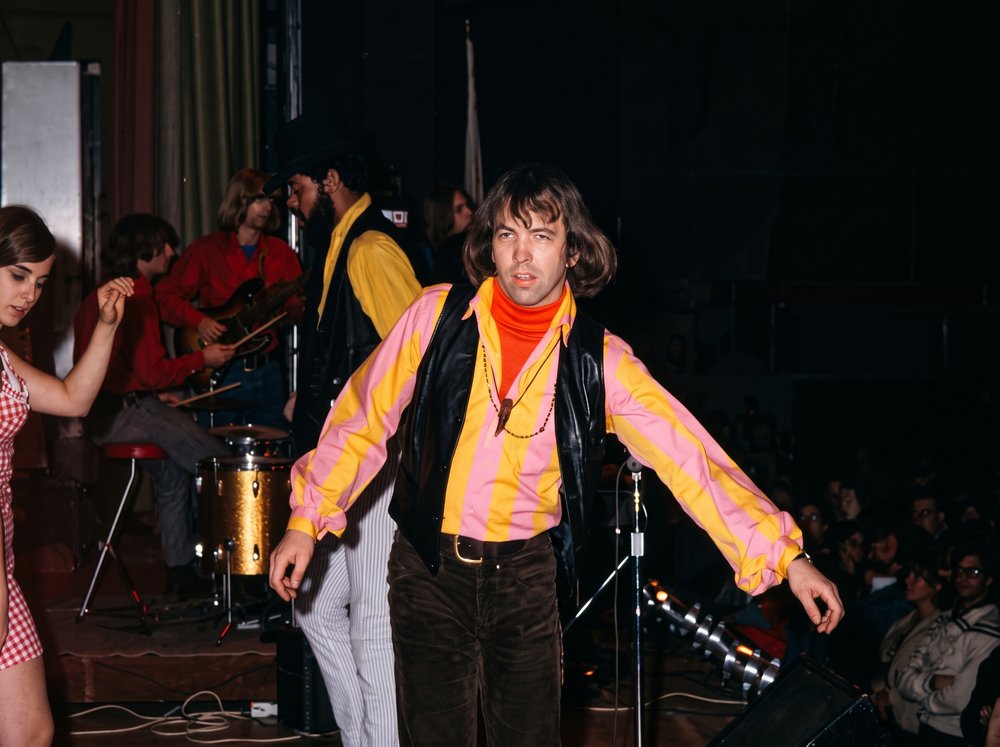
This is his love letter to cannabis, and some of it is just beautiful.
"The cannabis plant is a truly special emissary of the plant world to man, and is a great teacher of appreciation for the wholeness of the lifeforce which animates this planet. It is a very beautiful plant, with a great vibrance and serenity, the very essence of the feminine creative energy. The Princess of the plant world, who gives us a wonderful gift in return for our care and attention."
Nobody needs to fact check that. It's how he felt, and plenty of us feel the same way. The trouble is the parts he wrote as science.
He believed people and cannabis go back so far that "all the near relatives of the plant have disappeared through evolutionary pressure", and that nobody even knew where to place it botanically. Not true. Cannabis has a living sister, and you've probably had some in a beer. It's hops. The two split apart tens of millions of years ago, long before there were any people. The family they belong to also includes the hackberry tree. And people didn't start growing cannabis hundreds of thousands of years ago. A big genetic study in 2021 put the start of domestication at about 12,000 years ago, in East Asia.
He also believed "The plant's sole reason for producing the resin is to induce men to cultivate and propagate it." It's a lovely thought. Evolution doesn't give a shit about lovely, though. Plants don't plan ahead for a farmer who might show up a few million years down the road.
And he believed the plant reads the grower's mind:
"Growers have found that the plant seems to sense the sort of effects, the "high", that the grower likes to experience, and will strive to produce that for him (or her)."
He got the dog right, too. "as little as half an ounce of the same plant will make a dog unable to stand up." Vets agree dogs are far more sensitive to THC than we are. The usual explanation is that dogs have a lot more cannabinoid receptors where the brain runs balance and coordination. A stoned dog wobbles.
MEAT, FAT AND IRON
Diet and Exercise
His diet essay is the one people remember. He ate meat and fat and almost no carbs, and he said so plainly: "I have eaten this way for 39 years". He even put a number on it. "I recommend no more than 5 grams a day of carbs".
The big picture has real support now. Cutting carbs for diabetes is old medicine, and he knew that. He wrote about "the traditional "cure" for diabetes, which was to place the patient on a diet with virtually no carbohydrates". In 2019 the American Diabetes Association said cutting carbs has the most evidence behind it for improving blood sugar in diabetics. It manages the disease. It doesn't cure it, which is probably why he put "cure" in quotes.
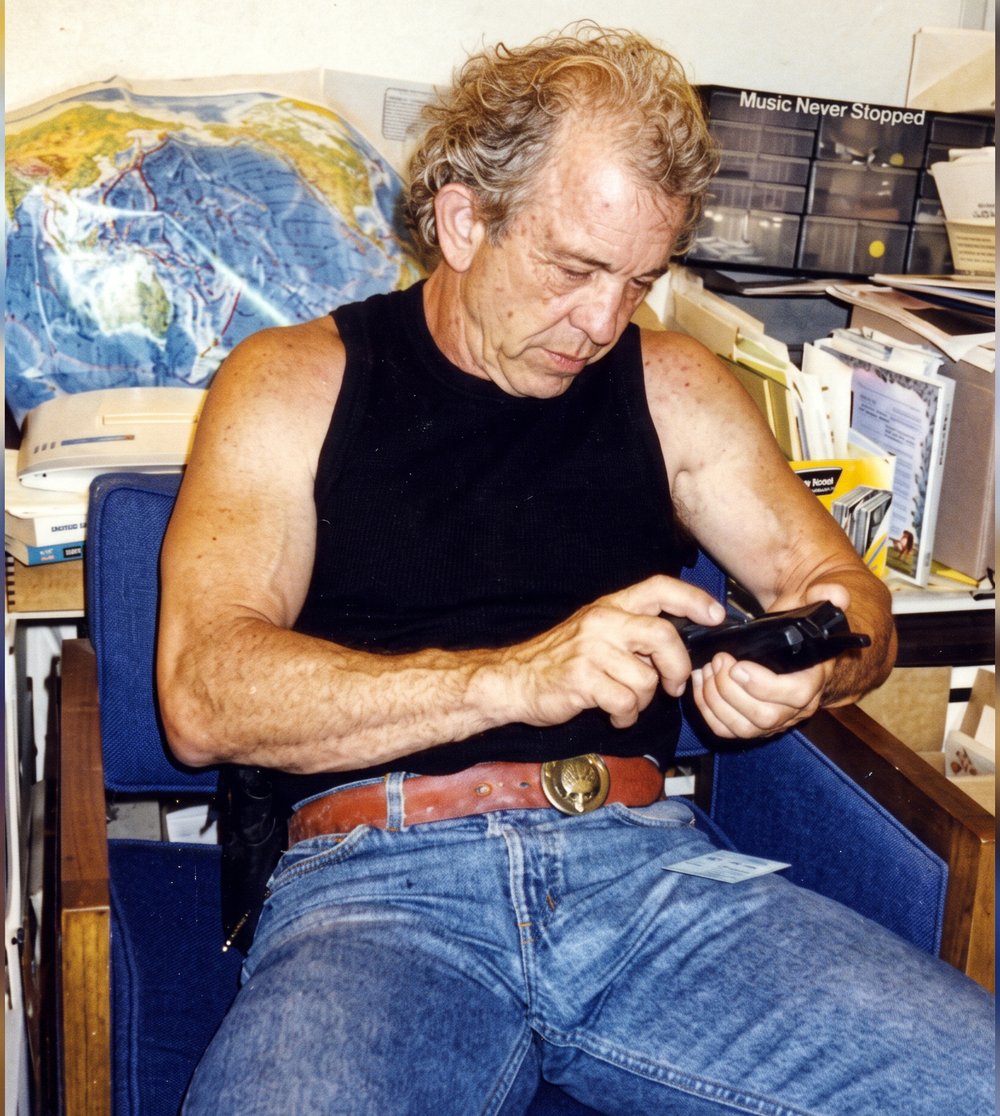
He was even more right about the iron. He started lifting weights at 55. "I was 55." People told him he was wasting his time:
"I had all sorts of people tell me things like: "you can't grow muscles after 40" (a doctor said this!)."
Owsley was right and the doctor was wrong. Study after study now shows that older people who lift heavy build strength and muscle. Even folks who've already lost a lot of muscle to age get stronger. The first good studies came out right around the time he started. He claimed "I have added nearly 30 pounds of muscles to my body in the last 7 years", and I have no reason to doubt him.
The problem is the chemistry he used to explain it all. Almost every mechanism in this essay is wrong as it can be.
He wrote that "the human body does not seem to be able to store fat that is eaten in the food, so the fat you eat must be burned up." That's bass ackwards. Your body stores dietary fat just fine. When you overeat carbs, your body mostly burns the carbs and lets the fat go into storage.
He wrote that "the body is totally unable to directly burn carbohydrates for energy, but must first convert them to fatty acids." Also wrong. Your body burns glucose directly, every minute of every day. Turning carbs into fat does happen, but in people it's a minor road. It only matters much when you're eating more carbs than you burn.
He wrote that "the glycogen levels in the muscles don't change during exercise". Swedish researchers stuck needles in people's thigh muscles back in 1967 and measured it. Glycogen drops toward zero during hard exercise, and you run out of gas as it does. That was proven before Owsley ever read his first diet book.
He mixed up his fats, too. He called linoleic acid "monounsaturated". It's polyunsaturated, the very kind of fat he warned people against. He said the fat on your body is the saturated kind. Human body fat is actually more monounsaturated than saturated.
Then there's cholesterol. Sometime after 1999 he added a plug for Uffe Ravnskov's book, The Cholesterol Myths. He summed it up this way: "he says fat is good for you and cholesterol has naught to do with heart disease." In 2017 the European Atherosclerosis Society went through more than 200 studies covering over two million people. Their conclusion was that the evidence unequivocally shows LDL cholesterol causes heart disease. That's about as settled as medicine ever gets.
And the Eskimos. He held up the old all-meat Arctic diet and wrote "That this is a healthy diet is not in dispute". It's very much in dispute. A 2014 review found Inuit people have heart disease at about the same rate as everybody else. The same review found more stroke deaths, not fewer. The low heart disease story was built on lousy records from remote villages with no doctors.
So here's how I'd put it. Owsley landed on a diet and a training routine that a lot of people would recognize as smart today. He got there by trying things on his own body and paying attention. Then he explained why it worked with biochemistry that was mostly incorrect. The results were real, however the reasons were not.
THE ULTRACYCLONE
Ice Ages: Cause of Glaciation

It's his most ambitious piece of writing, and the most confident. He said he'd been working on it since 1982.
Here's the theory in a nutshell. When Earth's closest approach to the sun lines up with the northern winter solstice, the atmosphere stores up energy. Eventually one Arctic storm spins up until it takes over the entire northern half of the planet for about six weeks. The storm sorts hot air from cold the way a little machine shop gadget called a vortex tube does. It gets so cold at the core that it makes liquid air. That liquid air falls out of the sky and starts the next ice age. The excess heat and charge get dumped onto the Moon, which melts the dark patches we see from Earth. Then bits of moon rock blow back to Earth as tektites.
And it wasn't just history to him. It was a warning:
"I must warn you: the extreme and unusual weather being experienced everywhere in the world at this time is part of the build-up which leads into this "storm", which will result in the next period of ice."
He said the northern hemisphere would be uninhabitable during the storm and that no seacoast settlement anywhere would survive. He said "I have discovered that most people don't want to know about anything which means that they must change aspects of their life if they are to survive, such as moving out of the northern hemisphere." He meant it. Can't say I blame him for wanting to warn people. He believed it.
It's wrong. Almost all of it.
He opened by dismissing the mainstream theory: "All attempts to model theoretical climatic scenarios such as the Milankovitch have failed to present any glaciation." The opposite was true. In 1976, scientists pulled cores out of the ocean floor and showed the ice ages swing on the same cycles as Earth's orbit. The paper was titled "Pacemaker of the Ice Ages." In 2016 a team in Germany tied the start of each of the last eight ice ages to summer sunlight and carbon dioxide.
He leaned on a big name for support. He said George Kukla of Columbia's Lamont-Doherty lab believed his idea "is the only currently believable one". There's no record of Kukla saying any such thing, and his published work points the other way. My guess is Owsley heard more in a friendly conversation than Kukla meant.
His evidence for liquid air raining down was a frozen mammoth:
"Evidence for the mist of liquid air is found in the Mammoths dug out of a glacier in Russia in 1905, frozen so quickly that the contents of the intestinal tract failed to ferment. There were fresh daisies in the stomach."
That's an old bullshit legend that has been floating around for a hundred years. The famous Berezovka mammoth was found in 1900 and dug out in 1901, and the write-up most people read came out in 1905. It wasn't flash frozen. It had started to rot, and the men who dug it out said the stink was unbearable. The plants in its mouth were ordinary Arctic plants. A 1961 review in Science found no evidence that any mammoth ever just froze to death on the spot.
For geological proof, he pointed to the sea cliffs on the Big Island of Hawaii. He said they "clearly show the age-related effects of severe winds and seas coming from the southwest at approximately 100,000 year intervals." The cliffs along those Hawaiian coasts are mostly the scars of giant landslides. The US Geological Survey mapped the seafloor with sonar in the late 1980s. They found landslide rubble spread over about 100,000 square kilometers around the islands. Some single slides run over 200 kilometers. Wind didn't carve those cliffs. Whole sides of the volcanoes fell into the sea.
The Moon part is where it really goes off the fucking rails. "Thus the heat passes to the Moon, melting the areas men call the Maria." The maria are ancient lava plains. The tektites he thought were moon rock turn out to match Earth's own surface sediments. Two of the big tektite fields have even been traced to specific impact craters right here on Earth. To be fair to him, a serious NASA scientist named John O'Keefe argued that tektites came from the Moon. Owsley wasn't crazy to like that idea in the '90s. It just lost.
Now, the parts that deserve credit, because there are a few.
The vortex tube is real. Pump compressed air into it and you get hot air out one end and cold air out the other. Owsley owned several and knew how to run them. He was also right that nobody fully understands why it works, and engineers are still arguing about it today. But the explanations in that literature are about pressure, friction and sound waves inside the flow. His explanation was that the tube sorts fast molecules from slow ones. That isn't one of them. And going from a gadget you can hold in your hand to a storm the size of half the planet? That's a leap with nothing under it.
He was right that "Siberia was essentially ice free" during the last ice age, while North America and Europe were buried. Northeastern Siberia really did stay mostly clear of ice at the last glacial peak, and scientists still argue about why. It wasn't always ice free in earlier ice ages, though, and ice did cover parts of the Russian Arctic.
He was right that there's a big patch of open water up in Baffin Bay that never freezes. The Inuit have hunted it forever. It's called the North Water. He was wrong about the cause. He said "The polynya is the result of the shallowness of Baffin Bay". It actually forms when sea ice jams up in Nares Strait to the north. The winds keep pushing the new ice away as fast as it forms.
And here's the one that impressed me. He said the trigger was Earth being closest to the sun right around the northern winter solstice. In his words, "These are exactly the conditions required." He fudged the numbers a little. Earth's closest approach is in early January, about two weeks after the solstice. The two have been drifting apart since the year 1246. But think about what that setup means. If Earth is closest to the sun in the northern winter, it's farthest away in the northern summer. Weak summer sun up north is exactly what the mainstream orbital theory says it takes to start an ice age. Northern summer sunlight really is near that low point right now. So Owsley picked the right orbital setup, and then hung the wrong physics on it.
So why no ice age? The same German team from 2016 explained it. It takes weak summer sun and low carbon dioxide together. With the carbon dioxide we've got in the air, they figure the next ice age is at least 50,000 years off. Probably a lot longer. No ultracyclone is coming. The northern hemisphere is going to be just fine on that score.
He closed the essay like this:
"I am an artist, not an engineer, so I may not have explained this thing in the most lucid fashion, but I have no doubts about it."
That last part, "I have no doubts about it", is the whole problem in six words.

THREE GREAT MYTHS
Myths in Modern Times
In this essay he took on what he called the Great Myths of Modern Environmentalism. Global warming. The ozone hole. Cars causing smog. He opened by saying he cared about the environment, and he did. He wanted population control and factories that waste nothing. Then he called all three of these scams.
He was wrong on all three. This is where the record is hardest on him.
Start with global warming. "The greenhouse effect is a myth", he wrote, and "Global warming does not exist". In the 2019 version he added a satellite. He said the "Pan Global Temperature satellite" showed the planet cooling, "a constant, continuing decline in temperature of 0.01 degree C per year".
Here's the thing, and it's important. He didn't pull that out of thin air. In the 1990s, the satellite temperature record really did show a slight cooling. The instruments rode on NOAA weather satellites, and the numbers came out of the University of Alabama in Huntsville. Then in 1998, two researchers named Wentz and Schabel showed in the journal Nature that the satellites' orbits had been slowly sinking. That made the readings come out colder than they really were. Once that was corrected, the record showed warming. By 2019 the same satellite dataset showed the lower atmosphere warming about 0.13 degrees per decade.
So Owsley trusted a number that was already being corrected. Then when he revised the essay, he made it bigger. And there never was a "Pan Global Temperature satellite." That's a real dataset remembered wrong.
He put carbon dioxide at "about 300 parts per million". At Mauna Loa it passed 430 in 2025. He believed the rise was the ocean warming up and breathing CO2 out. It's the other way around. The ocean has been soaking up about a quarter of what we put in the air. That's why seawater is getting more acidic. And he wrote that "Burning fossil fuels is probably one of the most important aids to the life cycle on this oxygen-rich, carbon-poor planet that man can do." That's an opinion, and a lot of people still hold it. The rest of us are watching the thermometer.
The ozone hole was next. "Likewise another myth, that of "ozone damage" was a scam developed by DuPont in a push to outlaw Freon." He said DuPont needed a ban so it could sell its new patented refrigerant, "called (get this!): Soma." It was called Suva, not Soma. And DuPont did sell it. But the science didn't come from DuPont, and the proof is in the sky. Under the Montreal Protocol, the world phased out about 99 percent of ozone-killing chemicals. The 2025 ozone hole over Antarctica was the smallest in five years. The ozone layer is on track to be back to 1980 levels around the middle of this century. You don't get that kind of recovery from fixing a problem that never existed.
He said there was "absolutely no verifiable data" that chlorine eats ozone anywhere but in a laboratory. He said CFCs are too heavy to ever reach the stratosphere. Thousands of measurements from balloons, aircraft and satellites have found CFCs up there anyway, because the air is always mixing. He said volcanoes put out far more chlorine, but volcanic chlorine mostly rains out long before it gets that high. And he wrote "Man's total OUTPUT of Freon never exceeded a hundred thousand pounds of equivalent chlorine". At the peak, the world was making more than a million metric tons of CFCs a year. That's over two billion pounds. He was off by a factor of more than ten thousand.
Then smog. His theory was that smog ozone comes from radioactive tritium leaking out of nuclear plants and bomb tests. Cars got blamed to cover for the nuclear industry. "This ozone is formed primarily by the decay of tritium". He insisted "There is absolutely NO way that ozone can be generated by any chemical or long-wave (visible) light-mediated reaction". A Caltech chemist named Arie Haagen-Smit worked out the real cause by 1952. Car exhaust and other hydrocarbons react with nitrogen oxides in sunlight and make ozone. The key step happens when sunlight splits nitrogen dioxide. The light that does it reaches right into the violet end of what we can see. That same reaction makes most of the ozone in the lower atmosphere.
He also wrote that "The most severe smog event in history occurred immediately after the only nuclear explosion ever to take place in the water, just after WW II." He meant the 1946 underwater test at Bikini. But Los Angeles had its first big smog attack on July 26, 1943, three years before Bikini. It was so bad people thought the Japanese had hit the city with poison gas. And the deadliest smog in history was London in 1952, which killed around 4,000 people in four days. Owsley said he lived near the orange groves in Los Angeles during the war, and I believe his memory of those smudge pots. The link to the bomb just isn't there.
I want to be fair to him here. He didn't make these up out of nothing. Each of these myths came out of a real argument that was going around in the '90s. There was real satellite data with a real error, and a real company with a real patent. Owsley grabbed the contrarian side of every one, and then called the people on the other side scammers. That's the part that hasn't aged well at all.
THE GROOVE
Analog vs. Digital, Music Intro, Albums
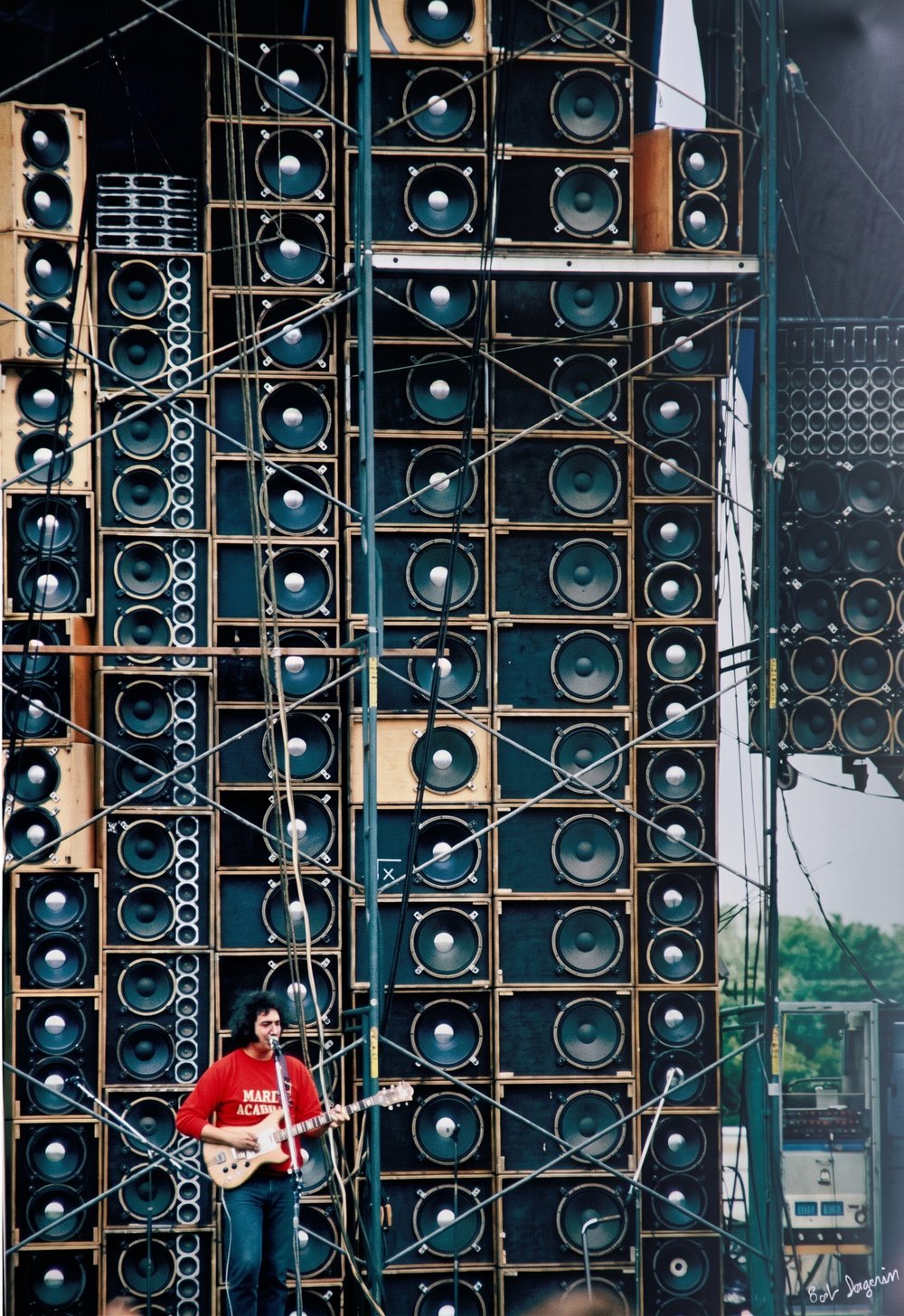
Now we're on his home turf, and it shows.
The vinyl crowd says records are more accurate than CDs. Owsley said it's not that simple, and he explained exactly why:
"That said, the real problem rears its ugly head: there isn't any stylus which can accurately trace the grooves in the plastic record."
The cutter that carves the master has sharp edges. Any needle you play it with has to be rounded, or it would carve the record right back up. So the needle can never follow the exact path the cutter made. The Audio Engineering Society has a paper on this called "Tracing Distortion on Vinyl LPs." It says this kind of error is typically the biggest source of distortion in vinyl playback. Owsley nailed the shit out of it, and he figured it out with his eyes and a microscope.
He didn't worship digital either. "I agree that the sample rate chosen for encoding CD's is far too low for the best fidelity", he wrote, and he hoped DVD would bring something much better. The high-resolution formats did come. Whether anybody can hear the difference is still a fight. A blind test in 2007 found people couldn't pick out CD quality from high-res at normal volume. A 2016 review of eighteen studies found trained listeners could, but just barely. So call that one half right, and you can still start an argument about it in any audio forum on the internet.
He imagined a cure for the needle: "Perhaps eventually some clever engineer will come up with a crossed-laser, non-contact pickup head for reading the vinyl grooves without causing meltdown." It wasn't a prediction, though. A company called Finial showed a working laser turntable at the Consumer Electronics Show in 1986. A Japanese company, ELP, started selling one in 1997, right about when he was writing. He was right about the idea. Somebody had just beaten him to it by a damn decade.
One miss. He said the vinyl comeback was "almost exclusively confined to the Rap/Techno market" and driven by DJs. That was fair in the '90s. It's not fair now. Vinyl has grown eighteen years straight, and in 2024 it outsold CDs in the US for the third year running.
His music notes have one of the best calls on the whole site. He's talking about tripping:
"The patterns that you see when stoned, for instance, are an artifact of the way the nerves in your eyes are arranged and mapped into the brain. Beautiful noise!"
Holy fucking moly. That's essentially what the science says. A few years after he wrote that, a group of mathematicians and neuroscientists published the explanation. The classic patterns people see on psychedelics follow from the way the eye is wired to the visual cortex. Tunnels, spirals, lattices and cobwebs. Owsley got there first, from the inside.
He also told the story of bringing sound engineer John Meyer into rock and roll. "I managed to interest him in the rock music field while I was monitor mixer for the Jefferson Starship in 1978, diverting his interest from the movie industry." Owsley did bring Meyer into the Dead's world, and Meyer Sound says so itself. But Meyer Sound says Owsley brought him in to help with the Wall of Sound in the early '70s, not 1978. Meyer had built a sound system for the Steve Miller Band at Monterey Pop way back in 1967. He'd been doing rock for a decade by '78. Right story, wrong year.
And then there's the Fillmore East. In February 1970, the Dead, the Allman Brothers and Love played a run there together, and Owsley ran the sound. For years Deadheads have talked about early and late shows on those nights. Owsley said that was nonsense, and he put money on it:
"Let me state here unequivocally, that there were NO "early or late shows""
He offered $1,000 cash to anybody who could prove him wrong. He was there, and he did the sound for all three bands. That counts for a lot. But the trade papers from that week say otherwise. Variety, on February 18, 1970, called it a "six-show" run over the holiday. Billboard reviewed the "second show" on February 11. Some tape collectors still side with Owsley, so this one isn't completely closed. But two papers that were there that week are tough to beat.
THE TUBE
Children's Television
Owsley hated children's TV, and he didn't pull any punches. He wrote that it "is the single most societally destructive activity ever developed." His point was that it isn't the cartoon violence that hurts kids. It's that they sit there doing nothing while they're supposed to be learning to be human.
Part of that holds up. The American Academy of Pediatrics now says no screens at all before 18 months except video chat. For kids 2 to 5, it says no more than an hour a day of good programming, watched with a parent. Toddlers under 3 have a hard time carrying anything they see on a screen over into real life. So he was right that the littlest kids are most at risk.
His evidence was piss poor, though. He wrote, "Children have been tested and it has been shown they don't learn from Sesame Street." A 2019 study looked at what happened when Sesame Street launched in 1969. Some places could pick up the broadcast signal and some couldn't. The kids who could watch it did better in school, especially boys and kids in poorer counties. The pediatricians' academy now names Sesame Street as an example of programming that can help kids 3 to 5.
He wrote that "NO kids in those days had what is now referred to as "dyslexia"." The first case of dyslexia was written up in the British Medical Journal in 1896, half a century before TV came into anybody's living room.
He said "up to 40% of kids in the US" were badly behind in reading. Funny thing is, that number matches today. In 2024, 40 percent of American fourth graders scored below the basic level in reading. But the same report says the share at basic or better hasn't changed much since 1992. Those kids in 1992 grew up on TV too. So a flat line since then doesn't do much for his theory that TV caused it.
There's one more thing in this essay I'll mention. He wrote "I was a TV broadcast engineer for many years, and still hold the highest class of license the US gov't issues." The man knew TV from the inside. He just didn't like what it did to kids.
ONE WORLD, ONE STANDARD
Standards
This essay is a wish list. One system of measurement. Everybody driving on the same side of the road. One world currency backed by gold. One electrical frequency. One TV standard. You can argue with the gold part, and plenty of economists would. But wanting less waste is a fair wish.
He opened with a fact that wasn't one: "The last country in the entire world which is not using the metric system in daily life is the US." He added "(The Burmese were the last Imperial country to convert)." The usual count is three holdouts, the US, Liberia and Myanmar. Myanmar is Burma. It announced in 2013 that it would go metric and hasn't made much progress in everyday use.
He got the history of electricity mostly right. He wrote that "Westinghouse engineers had always preferred 133 Hz" before settling on 60, and that the Germans went with 50. Westinghouse really did run early systems at 133 cycles and switched to 60, largely for Tesla's motors.
His engineering went off the track, though. He wrote "Not only is 50 Hz 20% less effective in generation, it is 10-15% less efficient in transmission". Long-distance power lines actually favor the lower frequency, not the higher one. Then he said if Europe just sped up its generators by 20 percent, it "would give a lot more energy from the installed base, 20+% without building more plants." That shit doesn't work. A power plant's energy comes from the fuel going into the turbine, not from how fast the generator spins. Spin it faster and you just get the same power at a different frequency, if the turbine can even take it.
He did have a point about the world never settling on one standard. Japan still runs two separate grids, one at 50 and one at 60. Even one country never managed to agree with itself.
WHO I THINK HE WAS

So what do you do with all this?
If you go through it the way I did, a pattern jumps out. When Owsley could touch it, he was usually right. The groove and the needle. A sound system you could walk more than a mile away from and still hear clean. His own body under massive weight. A dog that couldn't stand up because he was hammered on cannabis. The patterns behind his eyelids on acid, what I used to call eyelid movies. The economics of a black market. On those things he was sharp, and sometimes years ahead of the people with the credentials.
When he couldn't touch it, he reasoned his way to an answer. The atmosphere, the chemistry in your liver, the evolution of a plant. He'd build a mechanism in his head that made sense to him. Then he'd believe it as hard as he believed the things he'd seen with his own eyes. And he didn't go back and check it against the journals. That's how you get liquid air falling from the sky and melted spots on the Moon.
There's a second pattern too. A lot of his mistakes started with something real that he remembered wrong or held onto too long. The ozone refrigerant was Suva, not Soma. His cooling satellite was a real dataset with a real error that got corrected in 1998. His 1978 date for John Meyer was off by years, but he really did bring Meyer in. He trusted the contrarian books of his day, Ravnskov on cholesterol and Herer on hemp. He didn't hold them up to the evidence. A lot of smart people did the same thing in the '90s.
A lot of smart people still do.
And then there's the certainty. "I have no doubts about it." That served him well at the mixing board and at the workbench. A man who second-guesses everything never builds the Wall of Sound. But that same certainty is what made him call the scientists scammers on ozone, smog, and climate. Being sure as hell didn't make him right.
None of this analysis takes away from who the man really was. Owsley Stanley was a gifted engineer and a phenomenal live performance sound recording engineer. He was also a fine craftsman in gold and enamel. He was a brilliant, stubborn, self-taught man. He was right about a lot of things nobody wanted to hear, and wrong about a lot of things he didn't want to hear.
Read him the way you'd read any genius who never had an editor. He took his craft seriously, but he didn't always check the science behind it.
OWSLEY'S OWN PAGES
His own pages, as we've rebuilt them here: Essays, Essays continued, Ice Ages and Myths, Music intro, Albums.
SOURCES
Drug policy
- Was decriminalisation effective in Portugal?, UNSW Drug Policy Modelling Program, 2024
- Drug decriminalisation in Portugal: setting the record straight, Transform
- Oregon's first psilocybin service center, PBS NewsHour
- Colorado psychedelic-assisted therapy rules, Colorado Sun, 2024
- DEA downschedules state medical marijuana to Schedule III, Gibson Dunn, April 2026
- Revenue from illicit drugs: $400 billion, United Nations, June 1997
- Hemp, Hearst, and Prohibition, Skeptoid
- Hemp: from mythos to monoculture, Project CBD
- Leary v. United States, 395 U.S. 6 (1969)
- Leary v. United States, Wikipedia
- LSD timeline, Erowid
- Drug Abuse Control Amendments of 1965, National Commission report, Schaffer Library
- Diane Linkletter, Wikipedia
Cannabis
- McPartland, Cannabis systematics at the levels of family, genus, and species, 2018
- Ren et al., domestication history of Cannabis sativa, Science Advances, 2021
- Cannabis (THC) intoxication in dogs, Cornell College of Veterinary Medicine
Diet and exercise
- ADA 2019 nutrition consensus report, as reported by Diabetes.co.uk
- Resistance training in older people with sarcopenia, meta-analysis, 2021
- Straight et al., resistance training and muscle fiber size in older adults, 2020
- Hellerstein, De novo lipogenesis in humans, 1999
- Bergström and Hultman, glycogen metabolism during exercise in man, 1967
- Adipose tissue fatty acid composition, Scientific Reports, 2015
- Ference et al., LDL causes atherosclerotic cardiovascular disease, European Heart Journal, 2017
- Fodor et al., Eskimos and heart disease, 2014
Ice ages and climate
- Hays, Imbrie and Shackleton, Pacemaker of the Ice Ages, Science, 1976
- Perihelion, aphelion and the solstices, timeanddate.com
- Ganopolski et al., glacial inception, Nature, 2016
- Human-made climate change suppresses the next ice age, Phys.org, 2016
- Frozen mammoths, summary citing Farrand, Science, 1961
- Herz, Frozen mammoth in Siberia, Scientific American Supplement, January 1905
- Prodigious submarine landslides on the Hawaiian Ridge, USGS, 1989
- Tektites, chemistry and origin, Britannica
- Tektite, Wikipedia
- Energy separation in the vortex tube, review, 2020
- Siberia at the Last Glacial Maximum, Climate of the Past, 2020
- The North Water polynya ice arch, Scientific Reports, 2019
- Earth's seasons and perihelion, US Naval Observatory
- Wentz and Schabel, orbital decay and satellite temperature trends, Nature, 1998
- UAH satellite temperature dataset, Wikipedia
- Carbon dioxide peak passes 430 ppm, Scripps and NOAA, 2025
- Ocean acidification, Wikipedia
Ozone and smog
- Freon 134a, formerly DuPont Suva 134a, Chemours
- Small and short-lived 2025 ozone hole confirms recovery, WMO
- Montreal Protocol, 99 percent of ozone-depleting substances phased out, UNEP Ozone Secretariat
- How can CFCs get to the stratosphere?, NOAA
- Chlorine in the stratosphere, NOAA
- CFC production history, NOAA Global Monitoring Laboratory
- Fifty years of clearing the skies, Caltech
- Tropospheric chemistry notes, Penn State
- 50 years of progress, South Coast AQMD
Sound and music
- Tracing Distortion on Vinyl LPs, Audio Engineering Society
- Meyer and Moran, CD-standard loop in high-resolution playback, 2007
- Reiss, high resolution audio meta-analysis, 2016
- Laser turntable, Wikipedia
- RIAA 2024 year-end revenue report
- Bressloff et al., what geometric visual hallucinations tell us about the visual cortex, 2002
- Meyer Sound and the Grateful Dead
- John Meyer, Wikipedia
- Fillmore East, February 11 to 14, 1970, Variety and Billboard reprinted
Television and standards
- Kearney and Levine, Early Childhood Education by Television: Lessons from Sesame Street, 2019
- Kearney and Levine, Early childhood education by MOOC: lessons from Sesame Street, NBER
- AAP guidance on children's media, Michigan Medicine
- Dyslexia: a hundred years on, BMJ, 1996
- NAEP 2024 reading results
- Why the US doesn't use the metric system, National Geographic, 2024
- Metrication, Wikipedia
- Tesla and Westinghouse, Turbomachinery Magazine
- Utility frequency, Wikipedia